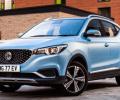
The MG ZS EV, to be unveiled next month, will go head to head with Hyundai Kona, launched in July this year as the country's first fully electric SUV.

Auto Expo 2023 may not trigger a fresh rally in automobile stocks, say analysts, as this year's edition lacks participation from major listed players. It is also owing to the focus on electric vehicles (EVs), a segment where four-wheelers have minuscule market share. "In the passenger vehicles (PV) segment, Maruti Suzuki India and Tata Motors are the only listed players.
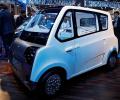
An EV has to be purchased along with the battery as there are hardly any battery swapping, rental, or leasing business models available across India.

On December 15, 2020, JLR announced that it has opened bookings of its first Plug-In Hybrid in India, the New Defender P400e.

India's second-largest passenger vehicles firm will be valued at Rs 1.59 trillion at the top-end of the price band of Rs 1,865-Rs 1,960.
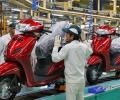
As the government plans no further extension of the scheme beyond FY24, the task is to achieve the unfinished target of subsidising 914,707 EVs.

Altigreen's hybrid engine will help make cars more fuel efficient and the air we breathe cleaner.
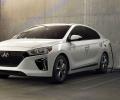
The company will showcase the Ioniq electric vehicle at the Auto Expo that begins next week.

The global semiconductor shortage hit passenger vehicle sales in September, with major manufacturers like Maruti Suzuki, Hyundai and Mahindra & Mahindra reporting a decline in sales on Friday. Kia India and Honda Cars also reported a dip in wholesales last month as compared with the year-ago period. Carmakers like Tata Motors, Toyota Kirloskar Motor, Nissan and Skoda, however, reported an increase in passenger vehicle dispatches last month despite supply chain issues.

'Two would be premium products and three would be mainstream products.'
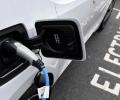
Proliferation of home chargers of around 7 KWh and above, which take six to seven hours to fully charge a car depending on the model, bring running costs down by a third or so. That, coupled with the increasing range of modern electric cars, can lead to a massive increase in sales.

The domestic luxury car segment is a key beneficiary of GST within the automobile space as prices are set to come down by up to ten per cent in most cases. Roland Folger, MD & CEO, Mercedes Benz India, speaks to Shubham Parashar on the significance of these changes on the industry and other issues.

Automotive (auto) and auto ancillary stocks have been in the fast lane thus far in 2023-24 (FY24), with the National Stock Exchange Nifty Auto Index surging nearly 27 per cent, outperforming the Nifty50, which has gained roughly 11 per cent during this period. The top-gear performance of auto stocks at the bourses, according to A K Prabhakar, head of research at IDBI Capital, has been triggered by the premiumisation of products across vehicle manufacturers, which has seen vehicle sales remaining relatively stable. "It is not about higher sales figures now, but about premiumisation.

'If it is your second car (electric vehicle), you typically keep it for travel within the city.' 'And the first car (internal combustion engine-run vehicles) can then be used to travel to some other cities.'
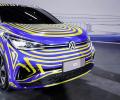
Ahead of the upcoming Union Budget, Society of Manufacturers of Electric Vehicles (SMEV) has asked Finance Minister Nirmala Sitharaman to either rejig the FAME II scheme or reintroduce FAME I, saying the programme meant to promote EVs in its second avatar has been able to achieve less than 10 per cent of its target. The Rs 10,000-crore FAME-II scheme which is to be implemented over a period of three years, came into effect from April 1, 2019. It is the expanded version of FAME India I (Faster Adoption and Manufacturing of (Hybrid) and Electric Vehicles (FAME) which was launched on April 1, 2015, with a total outlay of Rs 895 crore.

Wants road map for GST, reduction in duties and no additional tax on diesel cars.

Asserting that India has full potential to emerge as a global hub for electric vehicles by 2025, Union Minister Nitin Gadkari on Friday asked automobile manufacturers to reduce cost and forego profit initially to capture market and fuel growth. Once the market picks up there will not be any looking back, Road Transport and Highways and MSMEs Minister Gadkari said, promising all support to manufacturers in the initiative aimed at cutting India's huge import costs of crude and arresting pollution. The minister said he is scheduled to make an hour-long presentation on EVs before the Chief Justice of India post-Diwali.

While hybrids, CNG and biofuels found favour in 2018 among many carmakers including Maruti Suzuki, Mercedes-Benz, Toyota and Honda, others such as M&M and Tata Motors have shown full faith in electric vehicles.

Ola Electric became the latest among electric scooter (e-scooter) makers to have started the exercise of recalling a specific batch of its model after a rap on the knuckles by the government. Union Minister of Road Transport & Highways Nitin Gadkari on Thursday advised electric vehicle (EV) companies to act responsibly by identifying and recalling defective batches without waiting for orders or guidelines from the ministry. The Bengaluru-based start-up is conducting pre-emptive diagnostics and health check on 1,441 scooters, it said in a statement on Sunday.

Recently, Suzuki Motor Corp (SMC) in an investor presentation expressed strong intent to enter the electric vehicle (EV) space. This is part of a larger strategy the Hamamatsu-based firm has drawn up in developing electrification of technologies as it seeks to achieve carbon neutrality. The significance of this presentation is that it marked the first time that the Japanese carmaker spelt out its EV strategy with well-defined timelines. SMC plans to develop electrification technologies by 2025, fully implement them in products from the same year, and make a full-scale quantitative increase from 2030.

While home-grown firms like Tata and Mahindra have been actively participating in the government's e-mobility mission, by launching electrified versions of their existing models, the global firms believe electric is not the best solution for a country where the primary source of power generation is coal, and where infrastructure is a big impediment.
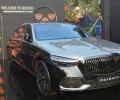
For the first time in history, the luxury car market is poised to cross the sales mark of 50,000 units in 2024, with Mercedes leading the way

Maruti will launch its first electric vehicle (EV) in the next financial year (FY24), and will roll out six EVs in the country by FY30, the automaker's parent firm Suzuki said on Thursday.
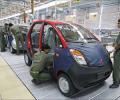
With an aim of boosting manufacturing and exports amid sharp fall in the rupee, the government has decided to take a slew of steps, including enhancing steel production capacity to 300 million tonnes and raising textile exports by 30 per cent this year.
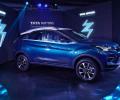
After clocking losses for seven straight quarters, Tata Motors on Wednesday posted a consolidated net profit of Rs 3,043 crore in the third quarter (Q3) of 2022-23. This came on the back of a strong order book, better semiconductor chip supply, tempered commodity prices, and a better product mix. "We remain cautiously optimistic about the demand situation, notwithstanding the global uncertainty.
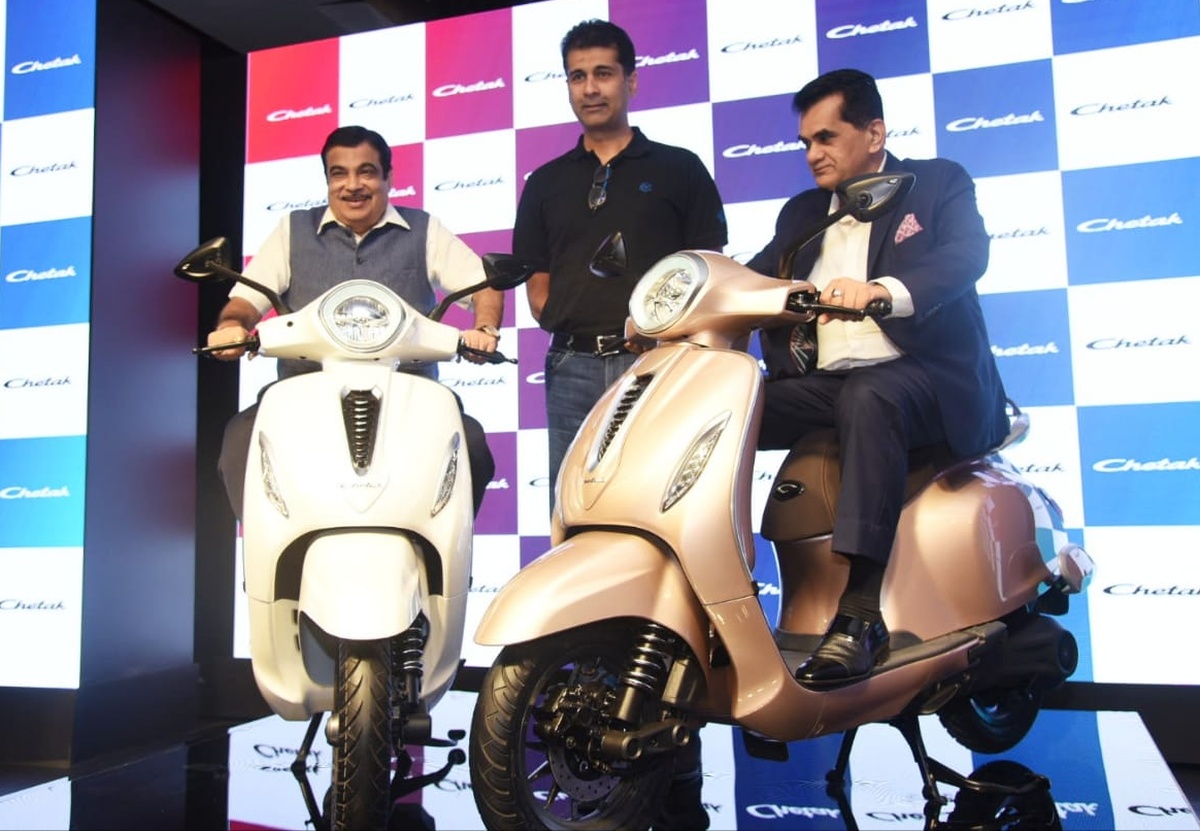
EV players suggest a reduction in the goods and services tax on batteries from 18 to 5 per cent as it would help push demand.

The board of Maruti Suzuki India (MSIL) on Tuesday approved a proposal to issue shares worth Rs 12,841 crore to parent company Suzuki Motor Corporation (SMC) for acquiring Suzuki Motor Gujarat (SMG). The Gujarat manufacturing plant - with an annual capacity of 750,000 units - is owned by SMG, a wholly-owned subsidiary of SMC. The shares issued to SMC will raise its ownership in MSIL from 56.48 per cent to 58.19 per cent--India's largest carmaker stated in a notice to BSE.

'A lot of players such as Maruti and Hyundai are entering the market in the first and the second quarters of 2025.'

Honda Motorcycle and Scooter India (HMSI), the country's second-largest two-wheeler manufacturer, is planning to launch its first electric vehicle (EV) here by March next year, said CEO & MD Atsushi Ogata on Monday. The company would also enter the low-end motorcycle market in March by launching a 100cc engine bike at a price that will "positively shock" customers, he said while speaking with reporters, after launching the Activa with Honda Smart Key. HMSI's first EV, an electric scooter, will have a fixed battery and the second model will have two swappable batteries, Ogata explained.
'We crossed Rs 1.7 trillion in three months this financial year.'

JLR is developing its own autonomous car technologies, which could one day trickle into Tata's more affordable people carriers.

For deciding which vehicles are to be scrapped, the setting up of fitness centres and regulating them would be a humongous task.

Maruti Suzuki India (MSIL) has ambitious plans to increase capacity. It is also seeking shareholders' approval for a complex swap transaction, which would acquire Suzuki Motor Gujarat (SMG), a subsidiary of Suzuki Motor Corporation (SMC) through a preferential offer. SMC already holds 56.37 per cent of MSIL's equity.

New Creta, petrol Vitarra Brezza.. A quick look at what went down at Auto Expo Day 2.

'Our expectations are that we will be able to double our market share from 14-15 per cent currently to around 30 per cent by the end of the financial year.'

Earlier in May, Ford India announced that it had dropped its plans to make electric vehicles (EVs) in India, which it intended to export, under the production-linked incentive scheme (PLI). Ford was among 20 companies that had signed a Champion OEM Incentive Scheme under the PLI project with the government in February this year. The decision comes as a blow for the 4,000-odd employees at Ford India's Maraimalai Nagar plant near Chennai and in Sanand, Gujarat. In September last year, the company had announced that it would exit the India market, which it had entered in 1995 through an on-again, off-again joint venture with Mahindra & Mahindra (they split in 1998, signed a JV in 2019 and split again in December 2020), retailing petrol and diesel brands such as the EcoSport, Figo, Aspire, and Endeavour.

These 10 stocks represent the best mix of value and growth, offering relatively low price-to-earnings and price-to-book ratios, a high return on equity, and sufficiently high potential from current levels.

GST rate for petrol and diesel cars and hybrid vehicles is already at the highest bracket of 28 per cent plus cess.

'If we are to be a contributor to the economy, we have to reduce carbon and imports.' 'We will achieve both -- that's our target.'
